


Add details such as ears and a tail, using smaller screwed up pieces of newspaper and tape.
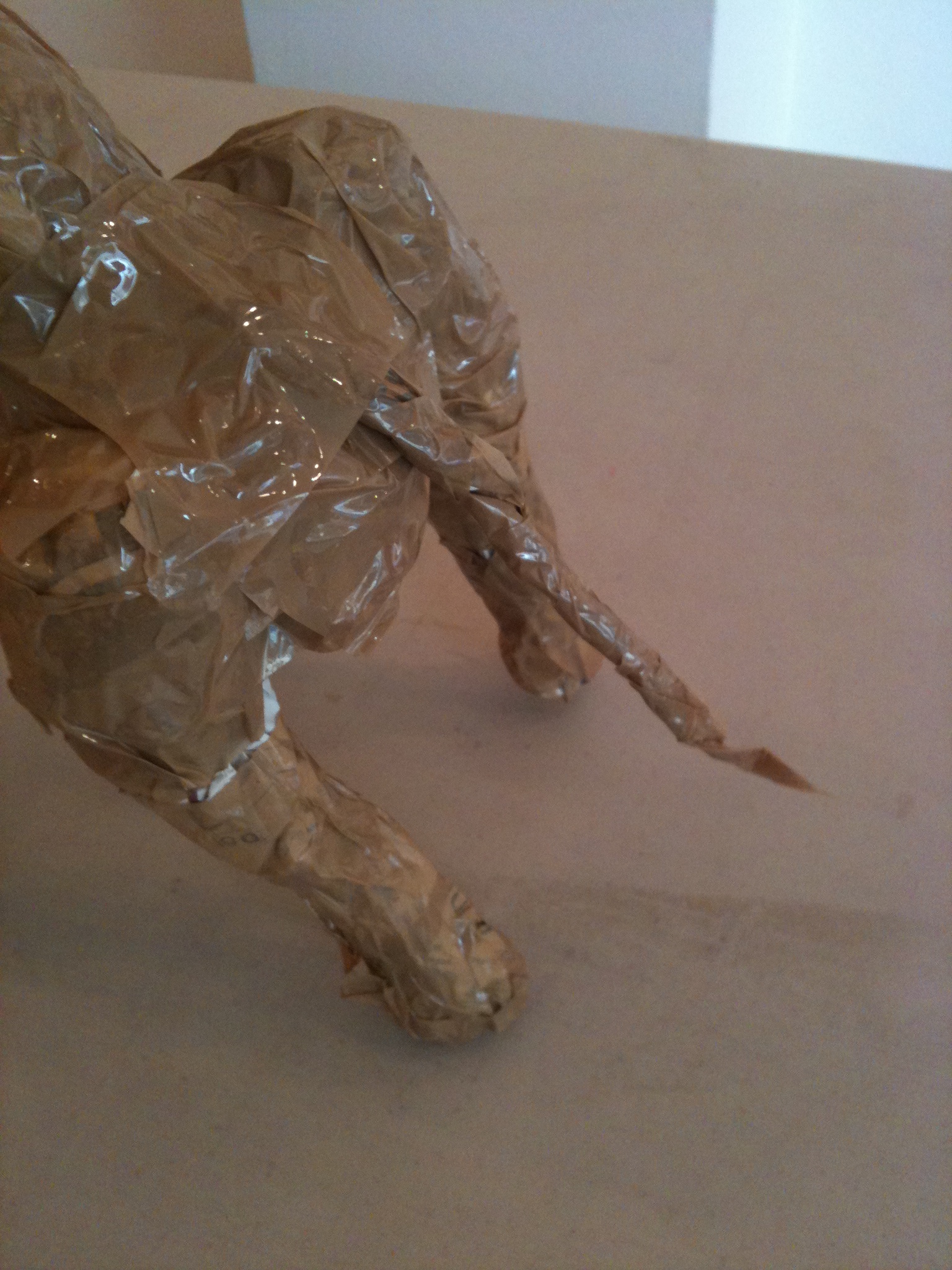
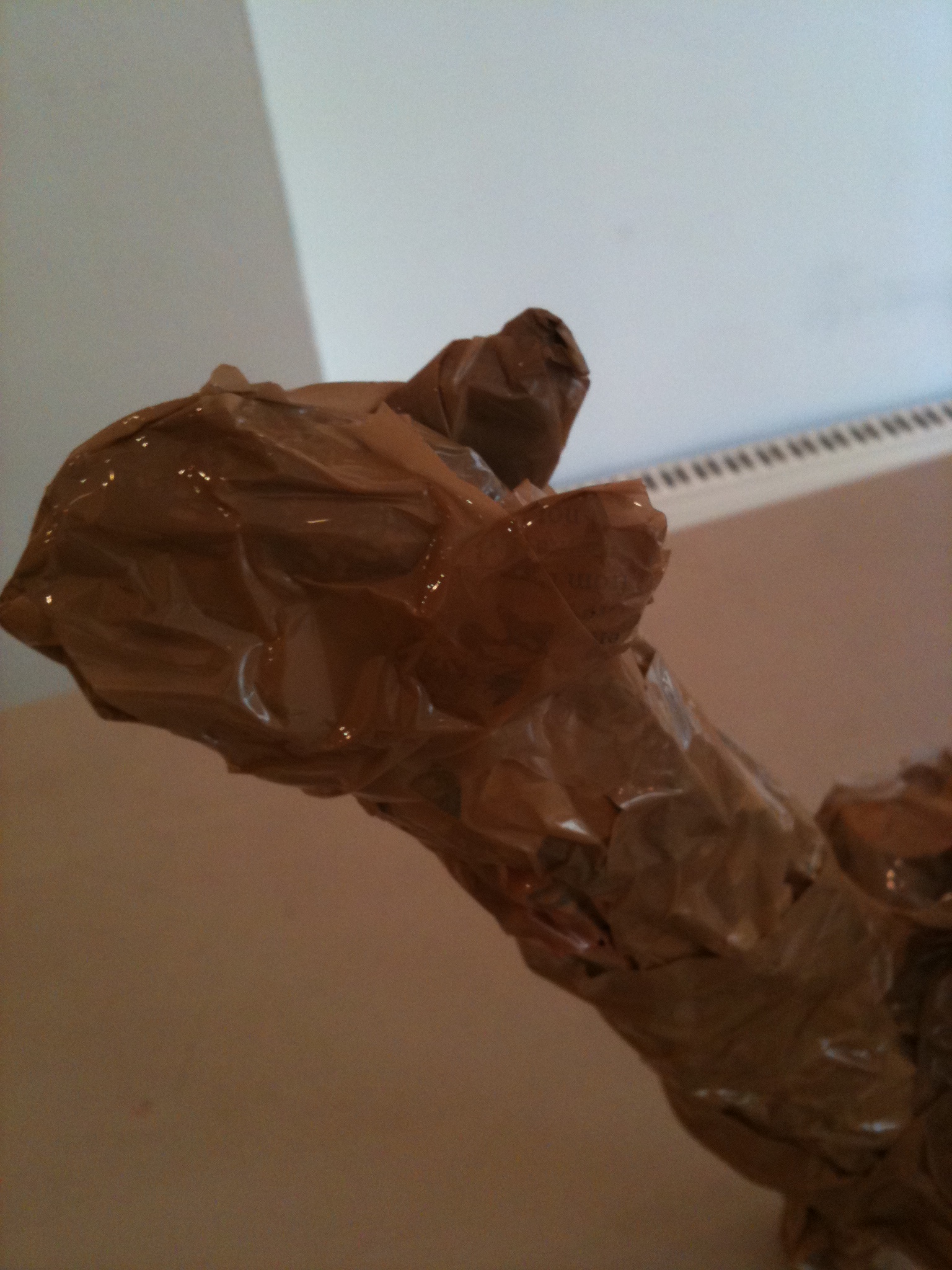
The sculpture is now ready to be covered. You can use coloured tissue paper for an immediate coloured effect, or newspaper paper mache, which can then be painted.
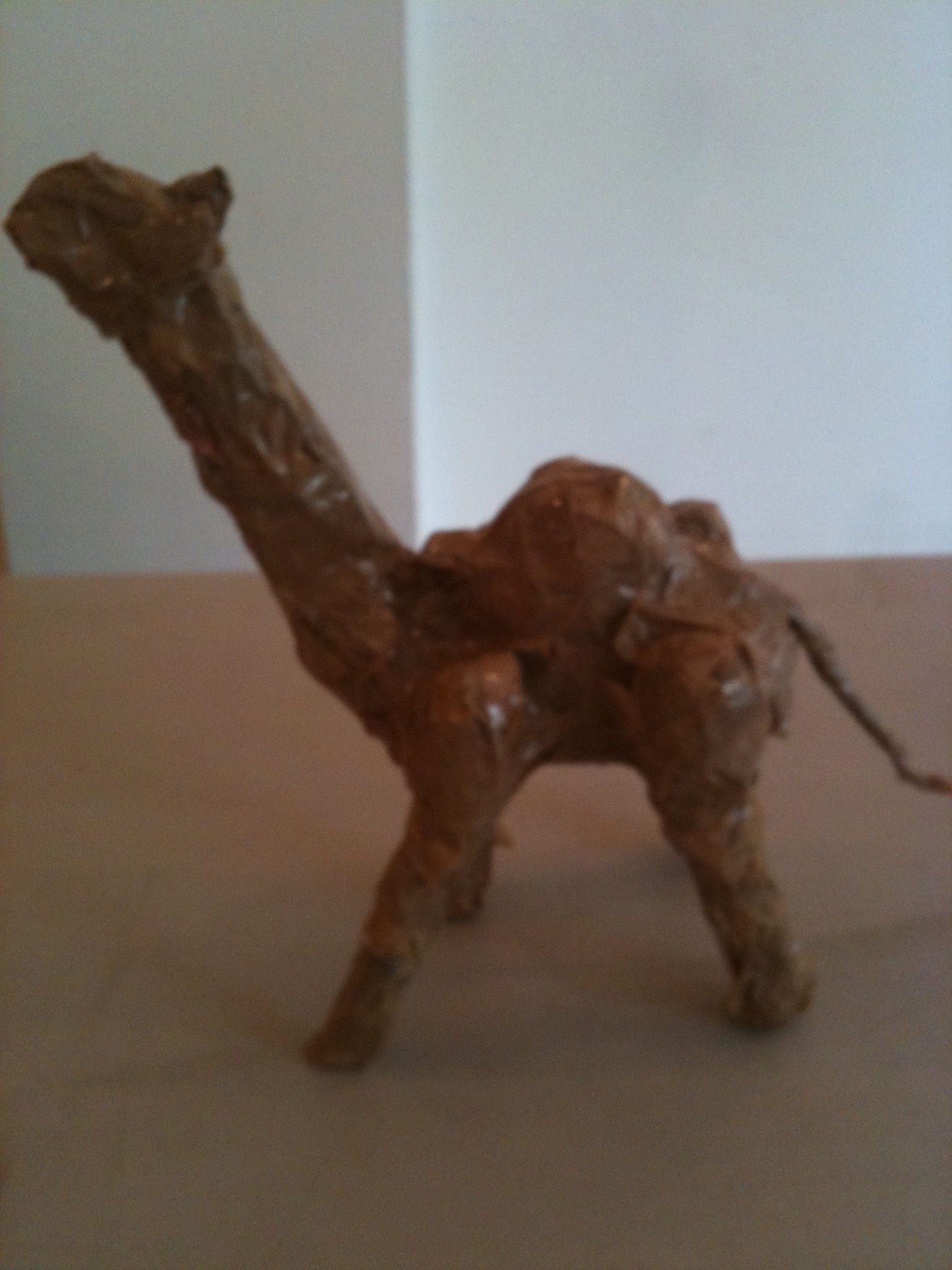


Prepare the PVA in water pots by adding 2/3 PVA glue and 1/3 water. Thick brushes can be used for paper mache, but make sure that they are soaked in water overnight to fully remove any glue residue. Pupils must add small pieces of paper to their sculpture, taking care to put glue underneath the paper and on top of the paper. This ensures that all paper is stuck down and that there is a smooth surface. The PVA dries to create a shiny varnish for the sculptures which enhances the colour.
Paint effects can be added with small brushes once the sculptures have dried.
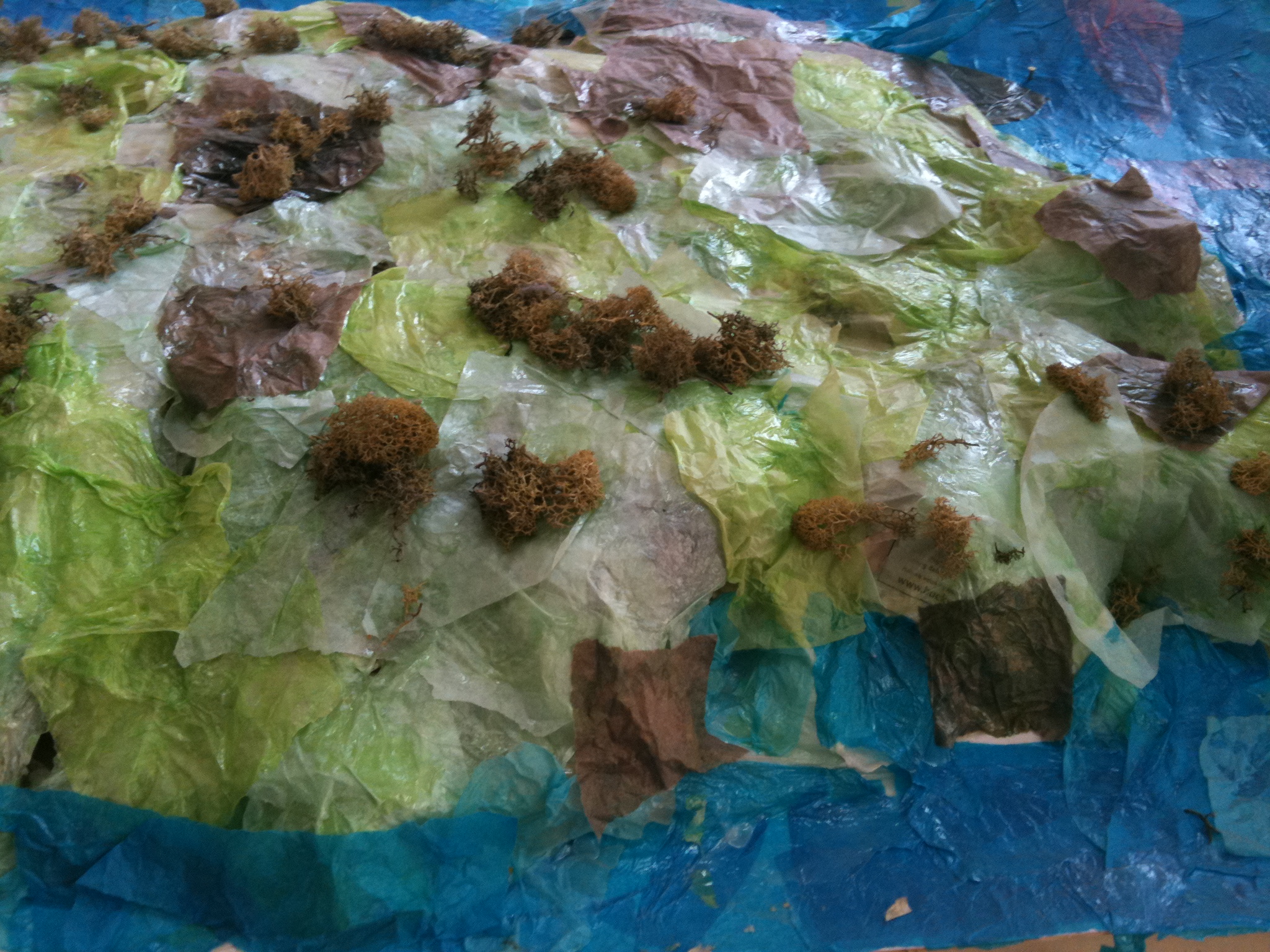
The same technique can be used to create habitats and environmental sculptures, such as this model of an island, created by Year 2 pupils. The models can be used with toy animals for play.

